
Launched My SaaS, Got No Users? 580 Reddit Posts on Why
The most common wall I found wasn't a bad product. It was not knowing who had the problem or where they talked.
 Tao WuFounder of dist0
On this page
I read 580 Reddit threads from founders sitting in exactly the spot you might be in right now: launched, live, and staring at a dashboard that says zero.
Why did you launch your SaaS and get no users?
The answer was rarely "the product is bad." It was simpler and more brutal: nobody knew who had the problem, or where those people actually hung out. That was the most common wall I found. Across 580 posts I read in r/SaaS and r/startups, 63 raised a real pain point of any kind, and 15 of those — roughly 1/4 — hit this exact wall: built it, launched it, got no users.
It's easy to feel like you're the only one stuck at zero. The threads say the opposite: getting no users came up more than any other pain I tracked. You're not the only one.
The post that captured it best came from u/sanjux97, titled "After months of building my first SaaS, I finally understood that building is the easy part":
Now that I've reached that stage, my biggest challenge is learning distribution and getting the first users.
Several replies said the same thing back: building was never the hard part.
Here's what that hard part actually feels like. u/Educational_Cable405, asked how they got their first users, answered:
Three daily actives, two of them me in a different browser, and the third a Gmail I made so the dashboard wouldn't read 2. Felt like a movement until the fake one churned.
Read it straight: he padded his daily active user count from two to three with another Gmail account — and even that fake user stopped showing up. The rest of this post is about why that happens, and what a few people actually did about it.
Is getting no users really a distribution problem?
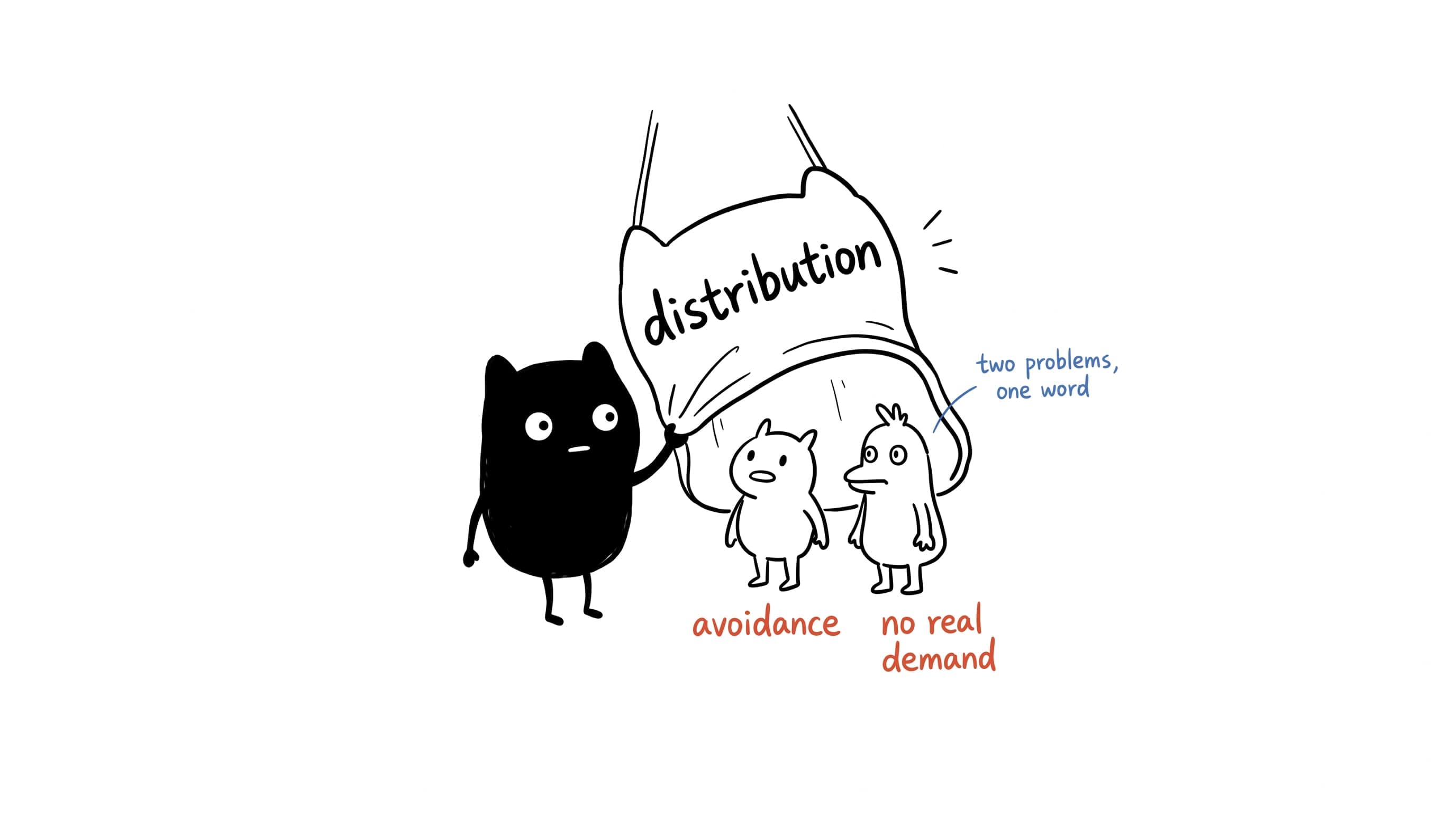
Usually not. It's usually one of two different problems wearing the word "distribution": a builder who keeps the product private until it feels finished, or a complaint that was never real demand.
First, the private-builder loop. u/Practical-Many-5952 had been cycling through ideas since 2020: get excited, research, build, then hit the part where the product has to leave the private workbench. He said he had no audience, no content skills, no interest in being on camera, and a habit of treating distribution as something that happens after the product exists.
I don't kill my projects because they fail. I kill them when they reach the part where another human being has to know they exist.
He gives up at the same point every time: the moment he'd have to show unfinished work to another person. The useful replies were not "post more." They were more specific: show a tiny demo, screenshot, or rough description before the product feels finished, then use the replies as the next build signal.
A stranger in the replies, u/Sea_Statistician6304, named it right back:
that is not a distribution problem, that is an avoidance pattern. and no distribution strategy fixes avoidance.
Then the second problem, demand that was never real. u/dmytro_mk, about two months in with basically zero signups:
I assumed a problem everyone complains about meant demand. It doesn't. Complaining is free, changing how you work isn't.
u/mebeingken, who had built bookkeeping software for small "kitchen-table" nonprofits, replied with the line that finished the thought:
making it easier wasn't what they wanted, they wanted to not do it.
Together, "distribution" looks like a costume thrown over two very different problems. Neither one — avoidance, or a complaint that was never demand — gets solved by posting harder.
Why does getting traffic not turn into real users?
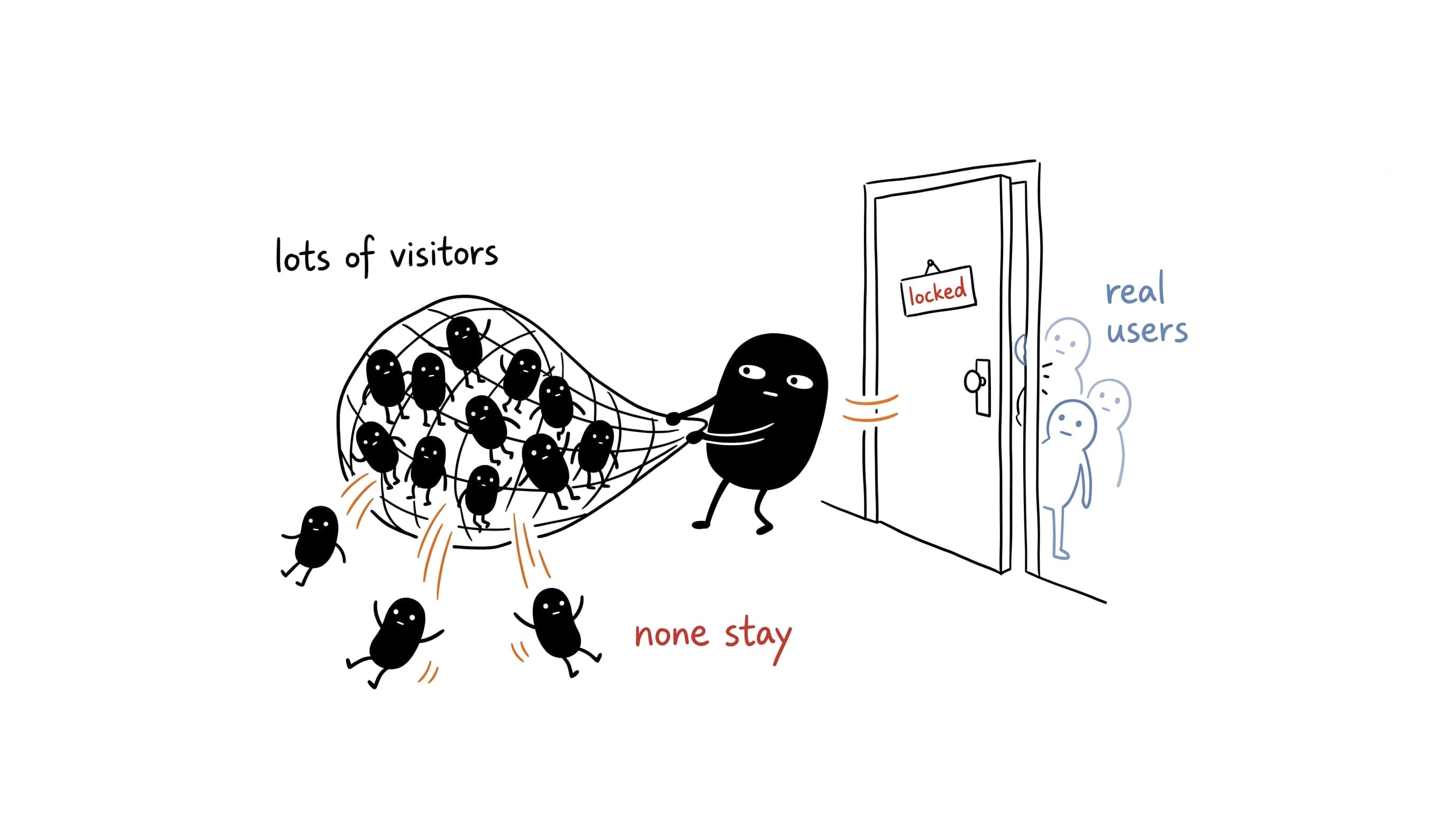
Getting traffic and getting users are not the same thing. The "just go where your users are" advice breaks in ways nobody warns you about — three founders did the marketing and still came up empty.
u/jerilmreji spent eight months building LangSpeak, a language-learning app, while studying engineering full-time. He launched, posted to founder communities, and pulled 77 visitors and 13 signups. Decent numbers. Wrong people:
Getting people to visit wasn't the hardest part. Getting the right people to visit was.
The founders gave him sharp feedback, but they were not the audience he was trying to sell to. They aren't language learners.
u/char-gen built CharGen, an AI kit for tabletop RPG prep. The obvious place to reach tabletop players was r/DnD, but r/DnD had just voted 85% to ban AI art:
every mention triggered a thread about whether AI tools should exist at all ... The first 100 users came from people who privately wanted the thing but wouldn't say so publicly.
Public posts in the biggest DnD subreddit turned into arguments about whether AI art should exist. He found his first hundred users privately, in DMs, smaller subreddits, and Discord servers where people wanted the tool but did not want to say so in public.
u/Motor-Credit8336 had four paying customers a month after launch and was doing everything right on paper — SEO, long-tail search queries — but those take months to start working. So he still described himself this way:
I built an amazing platform that is largely invisible to my ICP.
He'd tried cold outreach too, and it mostly missed. When someone told him to go where his buyers actually gather — Reddit — he hit the wall:
Reddit is hardcore against self promotion. Even if the mention is organic and relevant.
So the main roads he named were either slow or closed: SEO takes months, cold outreach mostly missed, and the communities where his buyers hang out ban anything that looks like selling. He had the right people in mind and no open way to reach them.
All three did the marketing. jerilmreji reached founder-community visitors instead of language learners. char-gen and Motor-Credit8336 had the right people in mind, but public posts in those communities either turned into AI-art fights or looked like self-promotion. None of the three was lazy; each had a channel problem that more generic traffic would not solve.
What actually helped founders get closer to their first users?
The strongest fixes in the threads all moved in the same direction: get specific before scaling. Deliver the outcome by hand, tell the walls apart once people are looking, name one exact buyer, and reach the right people directly even when it's uncomfortable.
u/achiya-automation shared a rule for killing bad ideas before you build them:
deliver the outcome by hand before you build anything. Find 5 people who obviously have the problem, do the work manually for them, and charge for it ... If nobody will pay even when you do it yourself, building the product won't change that.
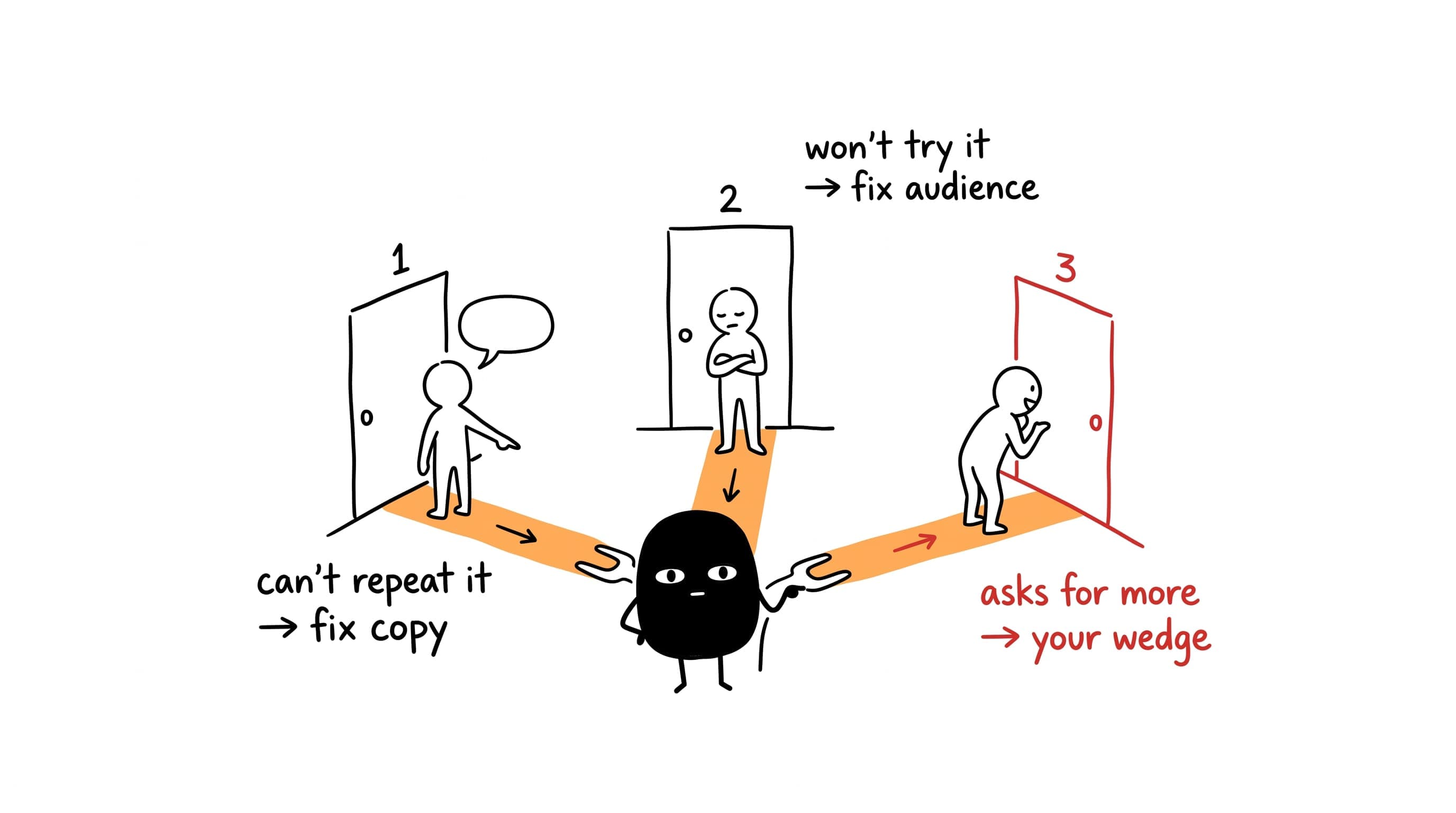
u/Character-Young-3414 gave the cleanest diagnostic I found for telling the walls apart once people are actually looking at your thing:
If none of them can repeat the promise in their own words, fix copy. If they repeat it but don't want to try it, fix audience/problem. If they try it and ask for the same next feature, that's your first paid wedge.
u/One_Sentence2580 was responding to a referral-style offer to find users for SaaS founders. His point was that referrals and outreach break when the founder only names a broad market:
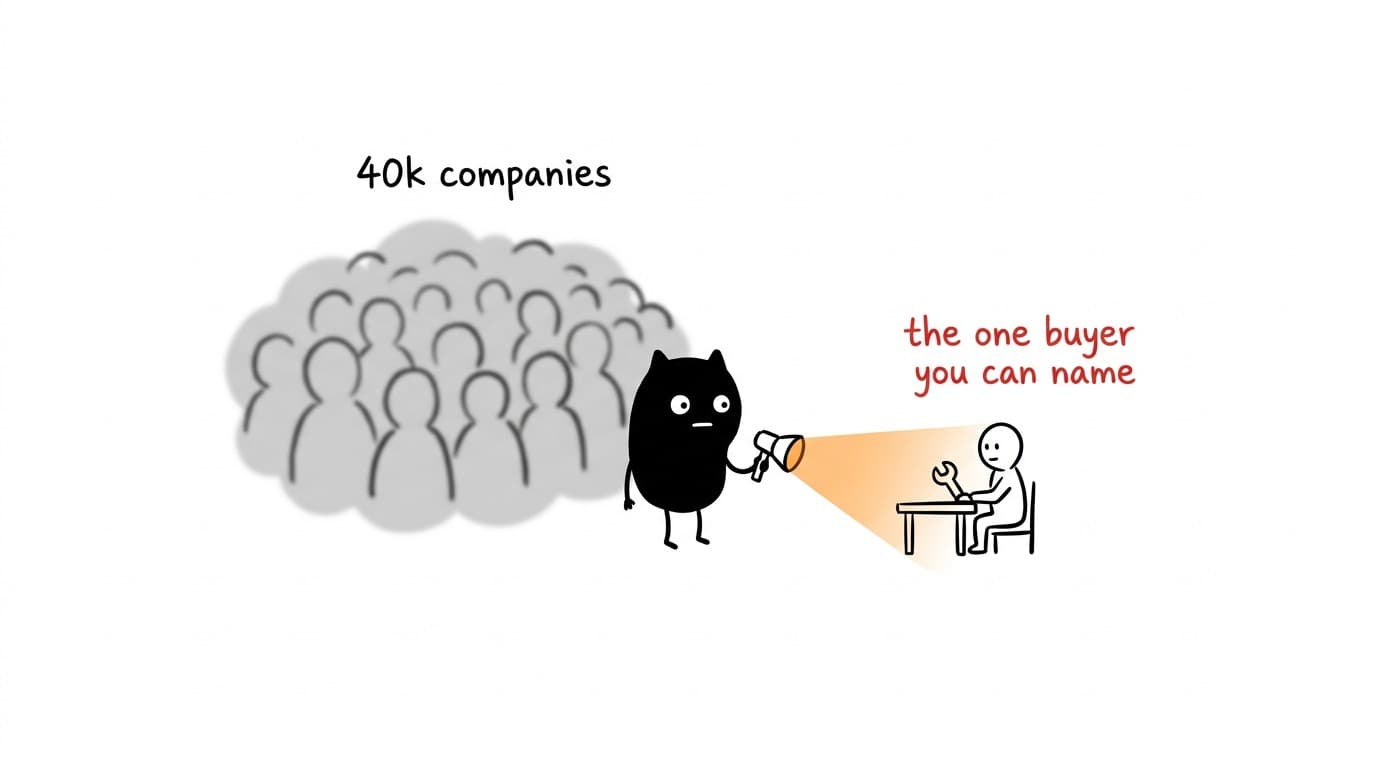
"SMB in legal" is still like 40k companies ... the founders who actually convert fast are the ones where you can say "i want the ops lead at a 10-20 person plaintiff firm using Clio" before they even explain their tool.
The useful buyer definition is specific enough to search for before outreach starts: the job title, the company size, the kind of firm, and the software that signals the workflow. "The ops lead at a 10–20 person plaintiff firm using Clio" gives someone a real target list to build. "Legal software for small firms" leaves the person doing outreach to guess which legal firms, which role, and which existing workflow matters.
Not every fix feels good. u/RelevantTurnip3482 — 17, building enterprise security — was coached to run the classic discovery call: book a chat as "I'm just researching how teams handle this," while hiding that you're really there to sell. He refused:
I don't want to manipulate them ... I hate it when people aren't upfront to me about what their intentions are.
He's right, and the honest fix has a cost. Reaching the right people directly means being upfront that you're selling, and getting told no a lot. The useful move can feel uncomfortable. That doesn't make it manipulative, but it does mean you have to be clear about why you're reaching out.
What's a repeatable way to get your first users?
Between them, the strongest examples pointed at three moves: find the exact problem in the buyer's own words, go straight to the right people, and keep showing up where those people already complain. Our opinion: this is the repeatable version.
- Find the real problems and build for them — in the buyer's words, not yours.
- Message the right people one at a time — a buyer you can name, like "the ops lead at a 10–20 person law firm," not a 40,000-company category.
- Keep publishing where your buyers already hang out — on a content loop you can repeat. This one compounds over months, unlike the first two.
dist0 helps you find the people and topics worth acting on. Paste your site's URL once; dist0 reads your site, watches relevant Reddit communities, and sends daily next-move guidance from real Reddit posts: leads to reach out to, content people already need, and offer ideas based on the pains people describe.
The proof I trust is theirs, not ours. u/Internal_Evening2098, who calls himself "techie, not marketer," ran pure cold outreach:
I was able to get 3 discovery calls from 24 outreach, 1 of them becomes my founding customer ... i am techie, not marketer, if i can do it, you can too.
Twenty-four messages. One founding customer. Not because he found a growth hack — because he aimed at the right people and was willing to be seen.
The pattern, in one line
Across 580 posts, the pattern kept coming back. The founders who stayed stuck kept treating "no users" as a volume problem — more posts, more SEO, more traffic. The strongest examples treated it as an aim problem: who exactly has this, where do they already complain about it, and am I willing to walk up and say so?
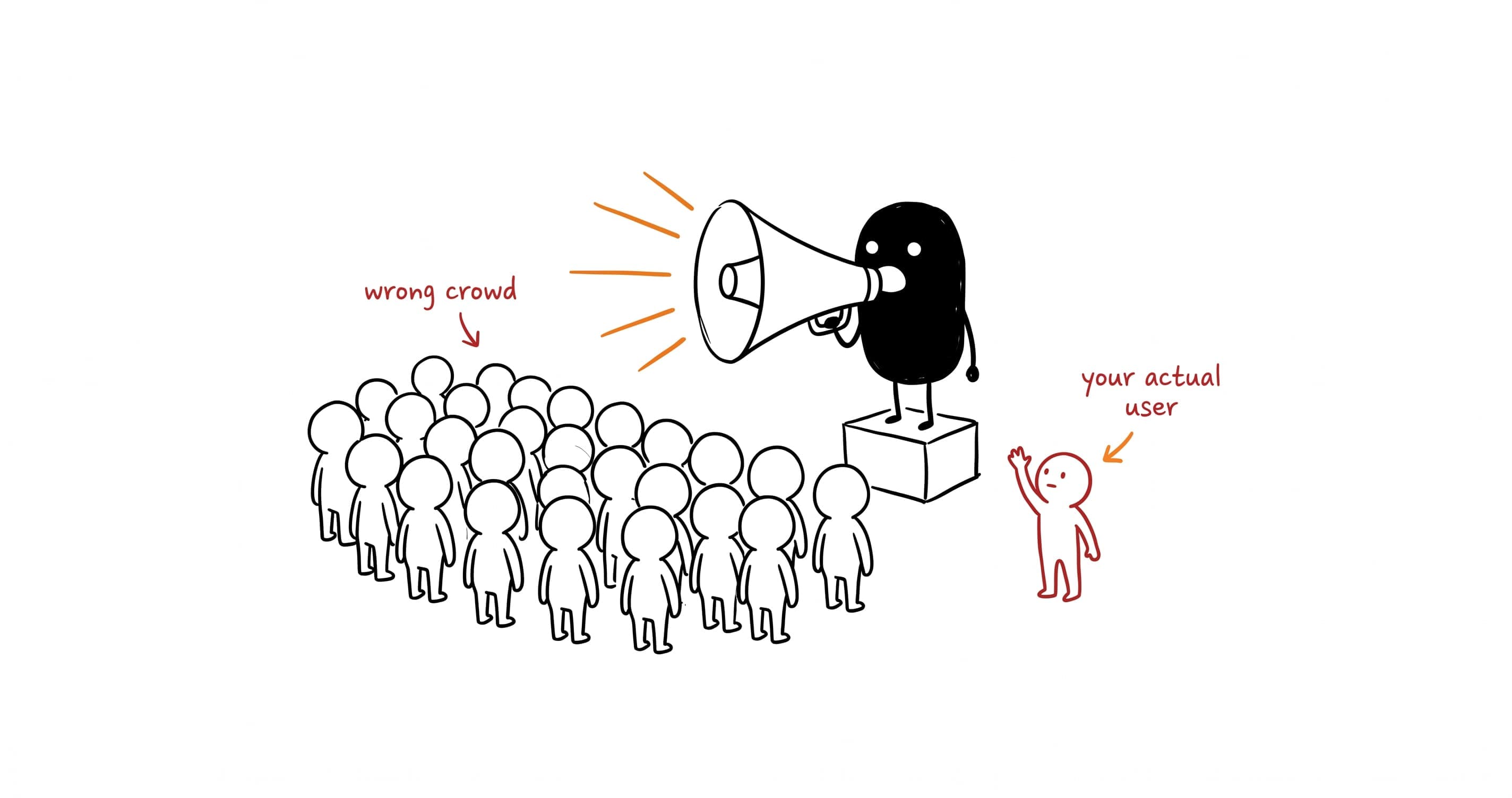
Building is the easy part because building is the part you control. The hard part is pointing at one real person and refusing to look away until they answer. You don't need an audience to start. You need a name.
Frequently asked questions
I launched my SaaS and got no users — what should I do first?
Before chasing more traffic, get specific about who has the problem. Name one buyer you could describe in a single sentence, find five of them, and talk to them directly. The clearest advice in these threads started with a handful of one-on-one conversations, not a bigger launch.
Is getting no users a product problem or a marketing problem?
Usually it's neither in the way founders assume. The most common pain I found in these 580 posts was a targeting problem: the product may be fine, but it reached the wrong crowd, or the right crowd couldn't be reached. A quick test from one founder: if people can't repeat your promise back, fix the copy; if they repeat it but won't try it, fix the audience or problem.
How do I get users with no audience and no budget?
Go where your buyers already complain about the problem, be genuinely useful first, and reach people one at a time. One founder in these threads got his founding customer from 24 cold messages. It's slow and manual, but it doesn't require an audience — it requires a specific person to aim at.