
The buyer pains your customers post on Reddit.
You’re guessing what your buyers care about. dist0 reads their subreddits and pulls out the exact problems they post — in their own words.
Paste your website. We will send your invite by email.
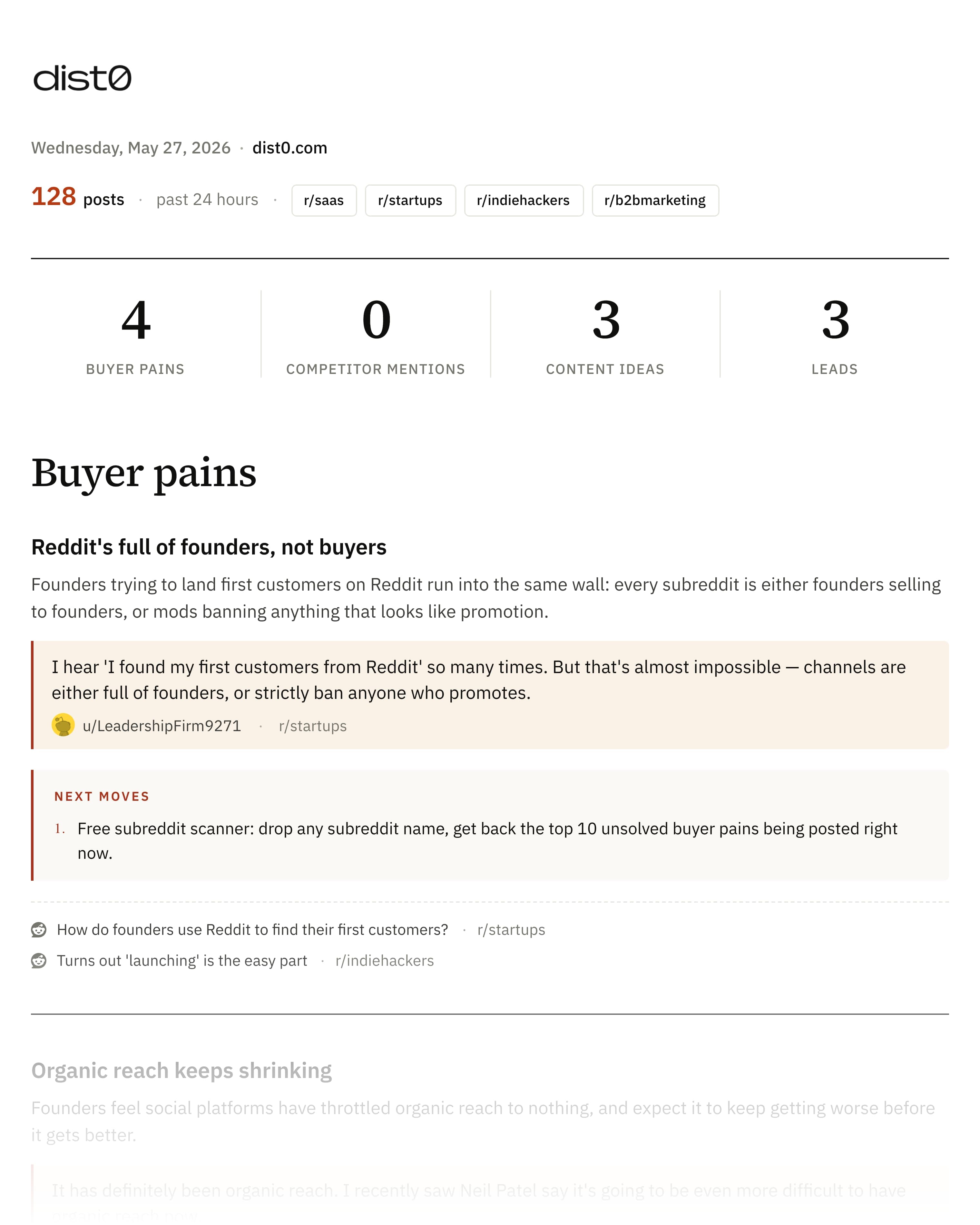
What counts as a buyer pain.
A buyer pain is a real problem someone posts that they want solved— the kind your product, your content, or a helpful reply could speak to. Not every complaint qualifies.
“Organic reach keeps dropping and I can’t get seen without paying.”
A struggle — a problem they’re stuck on and want a way out of.
“I’ve sent 200 cold emails this month and gotten zero replies.”
A dead end — the effort and the result named, and it isn’t working.
“How do I actually find my first customers on Reddit?”
A question — but they’re clearly stuck, so it counts.
“Reddit ads are a total ripoff.”
A vent — blowing off steam, with nothing they want fixed.
“Notion is overrated.”
An opinion — a take on a product, not a problem they need solved.
“You should just use email instead.”
Advice to someone else — helping another poster, not their own struggle.
Buyer pains are the core signal. dist0 also flags competitor mentions and self-promotion posts that did well alongside them, so you catch those too.
How dist0 finds your buyers’ pains.
We read the right places, sort every post, and surface the pains that show up again and again.
Read the right subreddits
dist0 finds the communities your buyers actually use — from your website, not a guess — and reads the latest posts every cycle.
Sort each post
It reads every post and decides what it is: a buyer pain, a competitor mention, a self-promotion post that worked, or just noise to skip.
Group the recurring pains
When the same pain shows up again and again, dist0 groups those posts and ranks them — a share-of-voice that shows what your market brings up most.
Over time, it gets sharper.
Each cycle adds more real pains to the pile. More data in, clearer picture out.
Early signal. A few pains start to show up.
Patterns emerge. Recurring pains get clearer.
Clear and ranked. You know what matters most.
A proprietary record of your market’s pains — built by you, not available anywhere else.
What keyword volumecan’t tell you.
Keyword tools and buyer pains do different jobs. Volume tells you how many people search a phrase. A buyer pain tells you what to say once they get there — you want both.
How many people search a phrase this month.
A count — demand, measured from a distance.
A number, ranked against other numbers.
A ranking — no story behind why anyone is searching.
Which topics are crowded — and everyone else sees them too.
The same map — shared with every competitor who pays for it.
The exact words your buyer used to describe the problem.
The language — copy you can lift straight into a headline.
The real thread it came from, so you can read the full story.
The context — who they are, what they tried, what failed.
What to actually say, so your content earns the click instead of blending in.
The angle — an edge nobody else’s dashboard shows.
We don’t replace your keyword tool — keep it for reach. dist0 gives you the part it was never built to: the words, the context, and the reason someone cares.
Act on the pains, wherever you work.
dist0 brings the pains to you — no new dashboard to check daily — and lets you pull the data out however your team already works.

Slack
Ask the dist0 bot for your latest pains, dig into any one, or get a reply drafted — right in Slack.
Email
A short brief lands in your inbox on your plan's schedule. Nothing new to log into.
Web app
Open any project to browse every pain and its source thread whenever you want.
API
Pull every signal into your own tools, on your own schedule.
Webhooks
Each new signal is pushed to your endpoint the moment we find it.
CSV
Download the raw pains as a spreadsheet whenever you want them.
Or send each new signal straight into the tools you already use — more destinations on the way.



One recurring pain, four ways to act on it.
dist0 hands you the pains that keep coming back. Connect it to the tools you already use, and each pain can kick off real work — no extra dashboard, no copy-paste.


- 01
Watch your competitors
When a new name starts showing up in your buyers' pains, you hear about it early — before it's the one everyone recommends. See what it promises, and fix your own weak spots while you still have room.
- 02
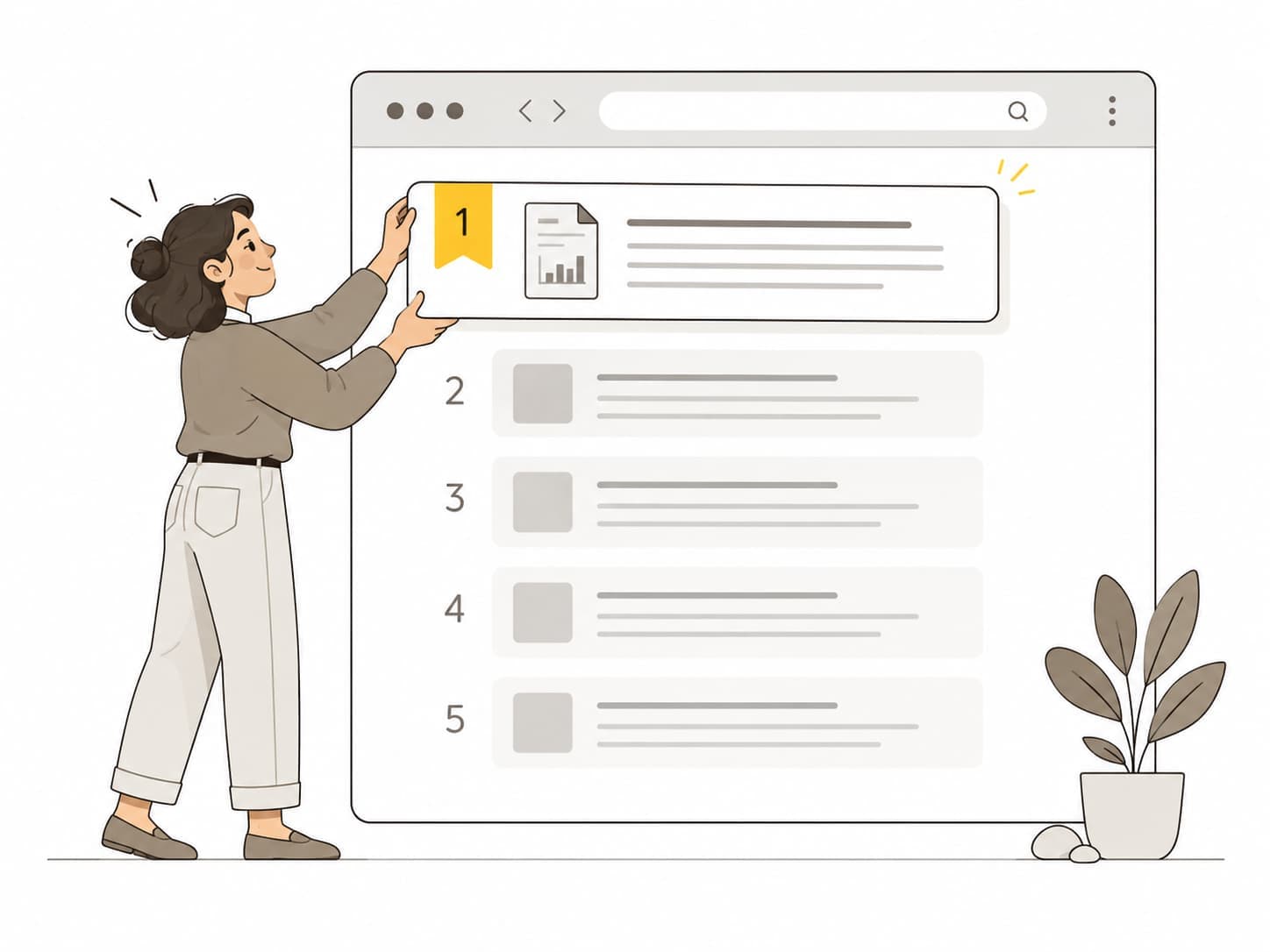
Publish reports that win the search
Turn a recurring pain into a report: why the problem keeps happening, why people give up on the tools they've tried, and where the market is moving. Rank for everyone searching that problem.
- 03
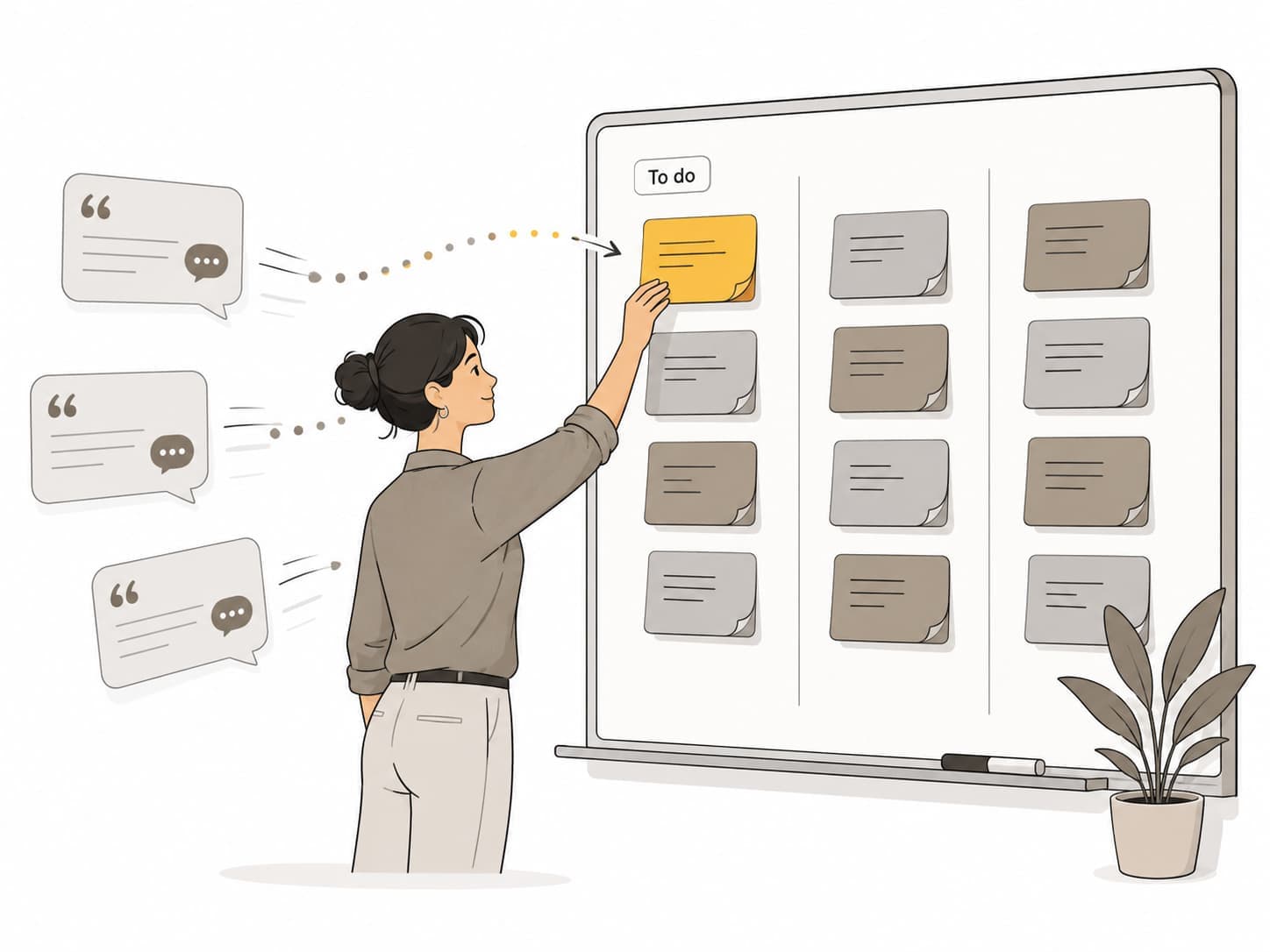
Feed your product plan
Send each recurring pain into your task board — GitHub, Linear, or any kanban — through the dist0 connection. One task per pain, and a fresh note every time another buyer raises it.
- 04
Win the people behind the pain
Keep track of who posted, and reply where you can genuinely help. When they warm to you, reach out and share what you built — a far better shot than a message out of the blue.
Questions about buyer pains.
If you have a different one, write us at support@dist0.com.